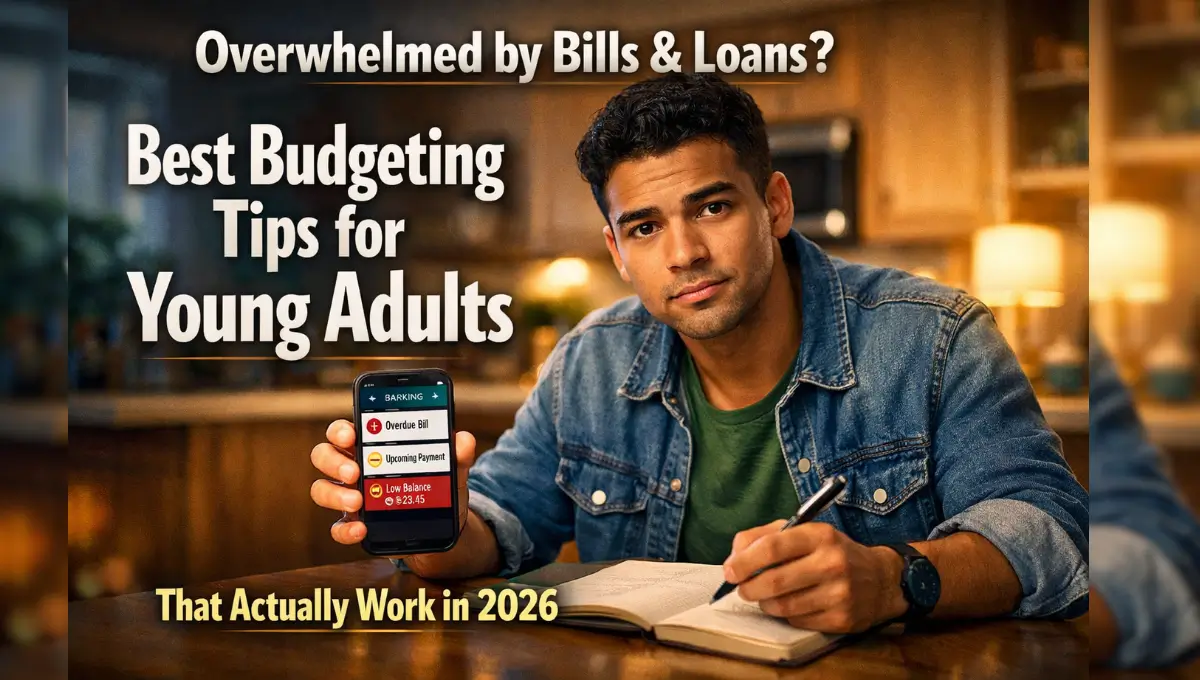
You know that heavy feeling when you sit down with your phone or laptop and see all those numbers staring back at you? The rent due date coming up, the student loan payment that barely makes a dent, the credit card balance that somehow keeps growing even when you try to be careful. Maybe you just finished a long 9 to 5 shift and ordered takeout again because you were too tired to cook. I get it. I have been around enough young people who are doing their best but still feel like they are drowning in financial stress.
If you are a young adult in the United States right now, budgeting for young adults is not just some nice idea. It is something that can actually give you back your peace of mind. The best budgeting tips for young adults are not about living like you are broke or punishing yourself. They are about creating a simple, kind plan that fits your real life so you can breathe easier, pay down debt, and start building something better for yourself.
You might be feeling stuck today, but I promise you there is a way forward that does not require you to be perfect. Let us talk through this together, honestly and gently, like two friends having coffee. By the time you finish reading, you will have practical steps you can actually use starting this week.
ALso read:- Don’t Wait for July 2026! 7 Critical Student Loan Steps You Must Take Before the SAVE Plan Ends
Why Budgeting Feels So Overwhelming for Young Adults Right Now
Life after school or college hits hard. One day you are figuring out classes, the next you are worrying about rent in a city where everything costs more than you expected. Student loans, credit cards from moving or emergencies, gas for your car, groceries that never seem to last, and trying to have some kind of social life on top of it all. It adds up fast.
I have seen so many of you working full-time jobs during the day and then picking up DoorDash or Uber shifts in the evenings just to stay afloat. The stress does not just stay in your bank account. It follows you into your sleep, your mood, and even your relationships. But here is what I want you to know: you are not lazy or bad with money. You are just dealing with a system that was not built to make things easy for young people starting out.
The best budgeting tips for young adults start with understanding that this is normal. You are not behind. You are simply at the beginning, and the right plan can change how all of this feels.
Have you ever caught yourself thinking, “Why does everyone else seem to have it together while I am struggling?” You are not alone in that thought. Most of us have been there.

The Simple First Step Most People Skip
Before you try any fancy budgeting method, you need to know where your money is actually going. This sounds basic, but most young adults skip it because it feels uncomfortable at first.
Take one weekend and look at your bank app or credit card statements for the last month. Write down or note what you spent on food delivery, streaming services, small online purchases, going out with friends, everything. No judgment. Just look.
I remember talking to a twenty-four-year-old guy working in retail who was shocked to see he was spending almost three hundred dollars a month on random snacks and energy drinks at gas stations. Once he saw it clearly, he started packing snacks from home and saved enough to make extra payments on his credit card. Small things like that add up.
You do not need a perfect spreadsheet. Just some honesty with yourself. This one step often brings more relief than you expect because knowledge takes away some of the fear.
Finding a Budgeting Style That Actually Fits Your Life
There is no single perfect way to budget. What matters is finding something you can stick with even on busy or stressful weeks.
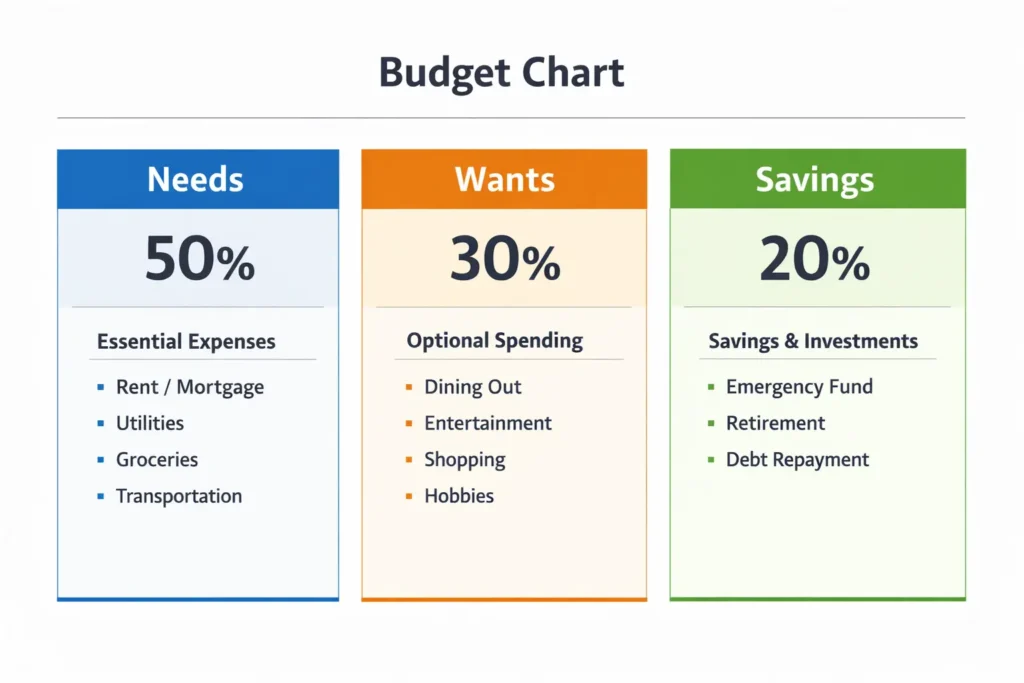
One simple approach a lot of young adults like is the 50/30/20 rule. Fifty percent of your take-home pay goes to needs like rent, utilities, groceries, gas, and minimum payments on loans. Thirty percent is for things you enjoy, like eating out or hobbies. Twenty percent goes toward savings or paying extra on debt.
Another easy one is paying yourself first. As soon as your paycheck lands, move some money automatically into savings or toward debt. Then spend what is left without guilt.
Some people prefer zero-based budgeting where every dollar gets a job. That works well if you like details, but it can feel too strict if you are just starting.
Pick what feels doable for you. If your life includes gig work like freelancing or driving for Uber, go with something flexible so you do not burn out.
A Real-Life Sample Budget for Young Adults in 2026
Let me show you what this can look like in real life. Meet Alex, a twenty-seven-year-old who works as an assistant in a dental office in a medium-sized city. After taxes he brings home about forty-two hundred dollars a month. He has student loans, rents a small apartment, and sometimes does DoorDash on weekends.
Here is how his monthly budget looks:
Needs (around fifty percent): Rent eleven hundred dollars, utilities and internet two hundred dollars, groceries three hundred eighty dollars, transportation and gas one hundred eighty dollars, minimum loan and credit card payments four hundred dollars.
Wants (around thirty percent): Eating out and coffee four hundred dollars, entertainment and streaming two hundred fifty dollars, clothes and personal stuff two hundred dollars, miscellaneous two hundred dollars.
Savings and extra debt payoff (twenty percent): Emergency fund two hundred fifty dollars, extra toward student loans four hundred dollars, retirement contribution one hundred fifty dollars.
Alex reviews this every couple of weeks and tweaks it when something changes. When he got a small raise last year, he put half of it toward his credit card instead of increasing his spending. That choice gave him a huge sense of control.
Your budget will look different depending on where you live and what your expenses are, but the idea is the same. Be honest about your numbers and kind to yourself as you build it.
10 Financial Tips for Young Adults That Make a Real Difference
Here are ten practical things that have helped many young adults I have talked with reduce stress and make real progress in 2025 and 2026:
- Set up automatic payments for all your bills so you never miss one and hurt your credit.
- Start an emergency fund, even if you can only put twenty dollars a week into it at first.
- Focus on paying down high-interest credit card debt before worrying about other things.
- Call your service providers once a year to ask for better rates on internet, phone, or insurance.
- Use cash for fun spending categories if you tend to overspend on apps.
- Cancel any subscriptions you are not really using.
- Learn to say no to things that do not matter as much as your peace of mind.
- Look for small side income opportunities like freelancing or gig work without overwhelming your schedule.
- Keep your credit card balances low to protect your credit score.
- Celebrate every small win, no matter how tiny it seems.
These are not fancy tricks. They are simple habits that add up when you stay consistent.
Let me ask you this: Which one of these feels like something you could try this month?
Smart Investments Young Adults Can Start With
Once your budget feels steadier and you have a little emergency money saved, it is worth thinking about the future. The best investments for young adults are usually the simple ones that let time work in your favor.
If your job offers a 401k with any matching, start there. Even a small percentage is worth it because the match is basically free money. A Roth IRA is another great option because your money can grow without taxes later.
Low-cost index funds are perfect for beginners. You do not need to pick individual stocks or watch the market every day. Just consistent small contributions over years can make a big difference.
In 2026, with costs still high in many places, building this habit early gives you a real advantage later.
Visual suggestion: Warm image of a young adult looking at their phone with a calm, hopeful expression, maybe showing a simple investment app screen.
How Side Hustles Can Give You Extra Room to Breathe
Sometimes the fastest way to get ahead is adding a little more income instead of only cutting expenses. Many young adults find that a side hustle brings both extra money and a boost in confidence.
It could be delivering food with DoorDash a few nights a week, offering skills like graphic design or writing on freelance sites, or even driving for Uber. The key is choosing something that does not drain you completely.
One young woman I know who worked in customer service started editing videos for small businesses on the side. That extra income helped her pay off her credit cards faster and still have some fun money left.
Whatever you earn from side work, try sending a good portion straight to savings or debt so it does not disappear into everyday spending.
How to Keep Going When Motivation Gets Hard
There will be weeks when you slip up. You will spend more than planned or feel like giving up. That is completely normal.
The secret is not being perfect. It is getting back on track without beating yourself up. Review your budget once a month, not every day. Talk to a friend who is also working on their money. Remind yourself why you started this in the first place.
Do you want less stress when you check your bank account? Do you want to travel someday without guilt? Keep that reason close on tough days.
You are capable of more than you think. Progress happens slowly, but it does happen when you keep showing up.
Internal linking suggestion: If student loans are weighing on you, take a look at our article on practical ways to handle student debt. For more ideas on earning extra income, check out our side hustle guides here on PayoffHustle.com.
FAQs
What are the best budgeting tips for young adults who feel completely overwhelmed?
Start very small. Just track your spending for two weeks without changing anything. That awareness alone often brings relief and shows you where small changes can help.
How do I make a sample budget for young adults when my income changes every month?
Use your lowest recent monthly income as a base. Build the budget around that so you stay safe even on slower months, then apply extra earnings toward debt or savings.
Which of the 10 financial tips for young adults should I start with first?
Most people benefit most from starting an emergency fund and automating bill payments. Those two steps reduce a lot of immediate stress.
Are investments realistic for young adults who still have debt?
Yes, but handle high-interest debt first. Once that is under control, even small contributions to a 401k or Roth IRA are smart because of the long time you have for growth.
Can side hustles really help with budgeting for young adults?
They can. The extra money gives you more options to pay down debt faster or build savings without cutting your current lifestyle too much.
How do I stay motivated with budgeting when life keeps getting expensive?
Focus on your progress instead of perfection. Celebrate every small win and remember that even slow improvement is still moving you forward.
What if I keep overspending even when I try to budget?
Try using cash for your wants category for a month. It creates a natural limit and helps you become more aware of spending in the moment.
Is the 50/30/20 rule still good in 2026?
It is still helpful as a starting point, but adjust the percentages to fit your city and situation. The most important part is having a plan you can actually follow.
You have already taken a meaningful step just by reading this far. That tells me you care about creating a better future for yourself, and that matters a lot.
I have watched many young adults slowly turn their financial stress into quiet confidence by making small, consistent changes. You can do the same. You do not need to fix everything overnight. Just take one gentle step this week.
My warmest salute to you for wanting something better and being willing to learn. You deserve to feel lighter about money. You deserve peace. Keep going, my friend. I am rooting for you.
Disclaimer: This article is for educational and informational purposes only. It is not financial, investment, or legal advice. Always consult a qualified financial advisor before making any financial decisions.

Richard Patterson is the founder of Payoff Hustle. With over 8 years of experience in personal finance and online income, he has helped thousands of people build profitable side hustles while working full-time jobs.